Best Japanese Hand Saws for Home Woodworking
Jump to:
Choosing the right saw can transform your woodworking experience. Unlike Western push saws, which cut on the forward stroke and require thicker blades for strength, Japanese pull saws cut on the pull stroke, allowing thinner blades, cleaner kerfs, and precise control.
This makes them ideal for fine joinery, detailed cuts, and smooth, effortless work. With a wide range of styles, from versatile ryoba (double-edged saw) and precision dozuki (backsaw) to deep-cutting kataba (single-edge saw), Japanese saws combine efficiency, accuracy, and craftsmanship.
This guide highlights the top brands and models to help you select tools that elevate both your technique and results.
Top Japanese Saw Brands and Models
Japanese saws come in a wide variety of styles, and certain models have earned lasting trust among home woodworkers for their sharpness, reliability, and ease of use. Below is a curated overview of the main types and what they’re best suited for.
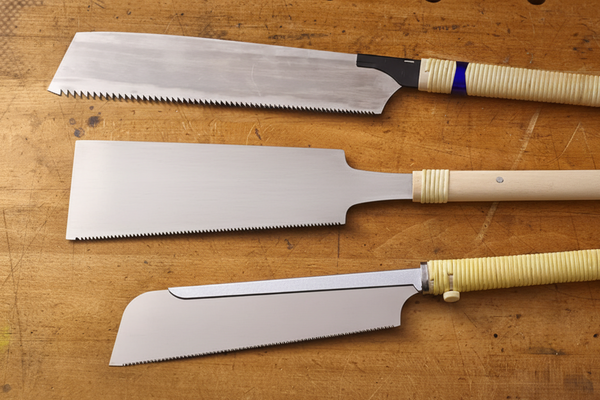
- Dozuki (backsaw) – The precision specialist. With a rigid spine supporting an ultra-thin blade, it excels at fine joinery like dovetails and tenons. Perfect for detailed cuts, though cutting depth is limited.
- Ryoba (double-edged saw) – The versatile all-rounder. Dual-edged for rip and crosscuts, it can handle general woodworking tasks and often replaces two Western saws in one tool.
- Kataba (single-edge saw) – The deep-cutting workhorse. Single-edge, spineless design allows deeper cuts, flush trimming, and hardwood work, offering control without the ultra-fine precision of a Dozuki.
Best for Precision & Joinery: Dozuki models (Gyokucho, Suizan)

Gyokucho Razorsaw Dozuki #300 and #370
These classic Gyokucho models are long-time favorites among woodworkers who value crisp, controlled cuts. Their rigid spines and ultra-thin blades make them especially well suited for dovetail joints and other delicate joinery tasks.
Gyokucho Razorsaw Thin Blade Dozuki #290
Even thinner and more refined, the #290 excels when an exceptionally narrow kerf and a light, responsive feel are required. It performs equally well in both softwoods and hardwoods, making it a strong choice for precision-focused work.
Suizan Dozuki Dovetail Pull Saw
Suizan’s Dozuki is widely appreciated for combining sharpness, comfort, and affordability. It’s an excellent option for both beginners and experienced woodworkers seeking clean, repeatable dovetail cuts without unnecessary complexity.
If you are interested in getting a Japanese pull saw, you can check out our guide on the best pull saw for you.
General Woodworking / DIY: Ryoba or Kataba models (Z-Saw, ZenShin)

Z-Saw Folding Carpenter’s Wood Cutting Saw
A practical and portable choice, this saw folds safely for storage and transport. It’s well suited for everyday cutting tasks around the workshop or home, offering a dependable balance of speed and control.
Z-Saw Foldable Framing Saw
Designed for tougher work, this model performs well in framing, trimming, and cutting thicker stock. Its folding design makes it convenient for job-site use or compact storage.
ZenShin Hand Curved Saw (300 mm)
With its curved blade, this saw is optimized for fast, aggressive cutting. It excels in outdoor and carpentry applications such as trimming, pruning, and rough shaping where efficiency is key.
Detail & Specialty Cuts: Coping saws, small Dozuki/Kataba combos

Kakuri Coping Saw with Blades
A traditional Japanese coping saw that provides excellent control for curved cuts, interior cutouts, and fine detail work. The included blades make it versatile across a range of materials.
Suizan 120 mm Dowel and Detail Saw
Compact and precise, this saw is ideal for flush-cutting dowels, trimming small joints, and working in confined spaces. Its fine teeth leave a clean finish with minimal tear-out.
Suizan 150 mm Dozuki and 265 mm Kataba
This complementary pairing covers a broad range of specialty tasks. The 150 mm Dozuki handles small, precise joinery, while the 265 mm Kataba allows for deeper cuts without a spine, offering flexibility and control in one setup.
Key Features to Look For When Buying a Japanese Saw
When choosing a Japanese hand saw, small details can make a big difference in both comfort and cutting precision. From blade thickness to handle design, understanding these key features will help you select a saw that fits your woodworking style and projects.
Blade Thickness
Japanese saws are known for their thin, flexible blades, which produce narrow kerfs and exceptionally clean cuts. Thinner blades glide through wood with minimal resistance but require a steady hand and controlled technique. Slightly thicker blades are easier for beginners, while experienced woodworkers often prefer ultra-thin blades for precise joinery.
Tooth Pattern
The tooth pattern determines how a saw interacts with the wood grain. Rip teeth cut efficiently along the grain, while crosscut teeth slice cleanly across it with minimal tear-out. Ryoba saws feature both patterns on opposite edges, making them versatile for general woodworking. Dozuki crosscut saws excel in fine detail and joinery.
Blade Type
Some Japanese saws have replaceable blades, which are convenient, affordable, and easy to maintain without learning traditional sharpening. Hand-forged saws, by contrast, can last decades if properly sharpened but require either professional services or skill in traditional techniques.
Handle Design
The handle affects comfort and control. Traditional Japanese handles are long, straight, and often wrapped in rattan, offering a light, balanced feel for smooth pull strokes. Modern saws may feature Western-style pistol grips, which can feel more familiar to those accustomed to Western tools.
Blade Length
Blade length impacts both speed and precision. Longer blades cut faster and are suited for breaking down large boards, while shorter blades provide greater control for detailed work. For most home woodworking tasks, a blade length between 210 mm and 270 mm offers an ideal balance of reach and accuracy.
Tips for Maintaining and Sharpening Japanese Hand Saws
Keeping a Japanese hand saw in top condition is easier than you might think. With simple care and attention, you can maintain its sharpness, accuracy, and smooth cutting performance for years. Here are key tips to help your saw stay in peak shape:
- Clean after each use – Wipe the blade to remove resin, sawdust, and fibers; use a soft cloth with mineral spirits or disinfectant if needed.
- Prevent rust – After cleaning, lightly oil the blade with machine oil or camellia oil to protect against moisture and rust.
- Proper storage – Use a blade guard or hang the saw on a wall rack to prevent bending, chipping, or corrosion.
- Replace blades when needed – Modern saws often have replaceable blades for easy peak performance restoration.
- Sharpen saw blades carefully (for hand-forged/vintage saws) – Each tooth must be filed individually with patience and precision.
Ultimate Cutting Control
Japanese hand saws combine precision, efficiency, and traditional craftsmanship, making them valuable for beginners and experienced woodworkers alike. From versatile ryoba to finely engineered dozuki or deep-cutting kataba, each saw offers clean, accurate cuts with minimal effort. Choose the tool that fits your projects and technique, and every cut becomes smoother and more enjoyable.
Do you have a favorite type of Japanese hand saw? Let us know in the comments.


0 comments