Best Woodworking Tools for Beginners
Jump to:
Starting woodworking can feel overwhelming at first. With so many tools, brands, and opinions out there, beginners often wonder what are the best tools for woodworking and which ones truly matter. The good news is that you don’t need a fully equipped workshop to begin. With a smart selection of essential woodworking tools, you can build skills, confidence, and quality projects right from the start.
This guide focuses on practical, beginner-friendly tools, both hand tools and power tools, along with advice from experienced woodworkers to help you avoid common mistakes and find the best path forward in your craft.
These tools form a solid foundation for anyone new to woodwork, whether you’re tackling small home projects or exploring fine woodworking as a hobby.
Best Tools For Woodworking Every Beginner Needs
1. Claw Hammer

A reliable claw hammer is one of the most basic yet important woodworking tools. It’s used for driving nails, pulling them out, and making small adjustments during assembly. For beginners, the weight and balance of the hammer are critical to avoid wrist strain and "hammer marks" on your wood.
A lightweight, well-balanced option like this Dogyu Stipane 360 Non-Slip Lightweight Claw Hammer offers better control and less fatigue for beginners. The non-slip surface is particularly helpful when you are still mastering your striking technique.
2. Chisels Set

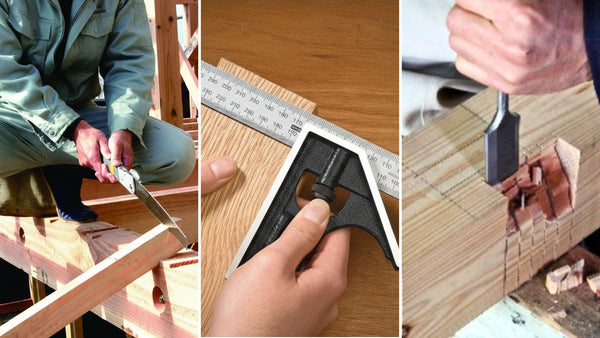
Chisels are essential for shaping joints, cleaning corners, and detail work. For beginners, a small set covering different sizes (usually 6mm, 12mm, and 24mm) is ideal.
Japanese and Western chisels each have unique strengths. Japanese chisels, or Nomi, are often made of harder steel that holds an edge longer but requires a specific sharpening technique. You can explore a variety of high-quality chisel options here.
To understand which style suits your workflow, these guides on Japanese chisels and types of wood chisels are especially helpful.
3. Hand Saw

A hand saw is often overlooked in the age of power tools, but it remains one of the best tools for fine woodworking. It allows for precise cuts and helps beginners develop a "feel" for the wood grain and cutting angles.
Japanese pull-saws are particularly popular with beginners because they cut on the pull stroke, which prevents the blade from buckling and results in a thinner, cleaner kerf. A Z-Saw Folding Carpenter’s Saw is compact, versatile, and easy to store. For exterior projects or harder composite materials, a specialized Ceramic Siding Saw can prevent damage to your finer woodworking blades.
4. Tape Measure

Accurate measurements are the foundation of good woodworking. Even a millimeter of error can lead to joints that don't fit and wasted lumber. A sturdy tape measure with a clear locking mechanism helps prevent these costly mistakes.
A durable, easy-to-read option like this Tajima Sturdy 5.0m Tape Measure is perfect for beginners. This tool is a cornerstone of what many consider the best layout tools for woodworking.
5. Combination Square

If you’re asking what are the best layout tools for woodworking, the combination square is always at the top of the list. It allows you to:
-
Mark perfect 90° and 45° angles.
-
Check the depth of a mortise or groove.
-
Ensure that your boards are square during assembly.
It’s simple, affordable, and used constantly, making it one of the most valuable precision tools in any workshop.
6. Screwdriver Set

While power drills are popular, a quality manual screwdriver set is still essential for delicate hardware and final adjustments where too much torque could split the wood. Japanese screwdrivers are known for their precision fit and durability, particularly when working with specialized wood screws that require a "no-slip" grip.
7. Cordless Drill

A cordless drill is often the first power tool a beginner buys. It handles everything from pre-drilling pilot holes (to prevent wood splitting) to driving long screws and even light sanding with the right attachments. When considering which woodworking tools are best for hobbyists, a 12V or 18V cordless drill with an adjustable clutch is a must-have.
8. Jigsaw

While a table saw is powerful, a jigsaw is much safer and more approachable for a beginner. It allows for curved cuts, interior cutouts, and creative shapes. If you are working in a small space, a jigsaw can handle many of the tasks typically reserved for larger, more expensive equipment.
9. Orbital Sander

Sanding by hand is a rite of passage, but for large surfaces, it takes an incredible amount of time and energy. An orbital sander moves in a random pattern to smooth surfaces evenly without leaving swirl marks. For professional-grade results, always work gradually through the grits (e.g., 80, 120, 180, to 220).
10. Tool Bag or Organizer

Keeping your tools organized saves time and prevents your sharp chisels and saws from getting nicked or dulled. Choosing a quality steel toolbox makes your workflow smoother and keeps your investment safe.
Expert Advice: Avoiding Common Beginner Mistakes
Seasoned woodworkers often say beginners don’t fail because of "bad" tools, they fail because of poor habits and a lack of maintenance. To move from a novice to a craftsperson, keep these tips in mind:
Common Mistakes to Avoid:
-
Buying Too Much Too Soon: It is tempting to buy every gadget in the aisle. Instead, buy tools as your project requires them. This ensures you invest in quality rather than quantity.
-
Ignoring Safety Gear: Wood chips and dust are hazardous. Always wear goggles, ear protection, and a dust mask.
-
Measuring Only Once: Always measure twice, and mark with a thin, precise line. For the highest level of accuracy, many experts suggest using a marking knife rather than a pencil.
-
Working with Dull Blades: A dull chisel is actually more dangerous than a sharp one because it requires more force to use, increasing the chance of a slip.
Success Habits:
-
Focus on Layout: Precision tools and good layout habits often matter more than brand names. Even when people ask what brand of tools is best for woodworking, the answer usually involves how well the user maintains their marking and layout gear.
-
Learn to Sharpen Early: Knowing how to put a razor edge on your chisels and plane irons will transform your woodworking experience.
-
Practice on Scrap: Before you cut into an expensive piece of walnut or oak, practice your joinery on a piece of scrap pine.
Where to Buy Quality Woodworking Tools
Beginners should look for retailers that specialize in woodworking rather than general big-box hardware stores. Specialty shops provide better tool quality, clearer product descriptions, and gear that is actually designed for the rigors of the craft.
Online woodworking retailers are especially helpful for accessing specialized Japanese hand tools, high-carbon steel chisels, and curated collections specifically selected for those just starting their journey.
Getting started in woodworking doesn’t require a massive financial investment, just a foundation of the right tools and a willingness to learn. By choosing a balanced mix of hand tools for precision and power tools for efficiency, you’ll be able to tackle everything from simple shelving to fine furniture.
Whether you are focused on the quiet, meditative aspect of hand-tool woodworking or the speed of modern power tools, understanding what are the best precision tools for woodworking comes down to three things: accuracy, comfort, and reliability. Start small, master your current kit, and upgrade as your projects grow in complexity. With the right habits, woodworking becomes more than just a hobby, it becomes a lifelong craft of creation.


0 comments