How to Build a Fire Pit: Easy Step-by-Step DIY Guide
Jump to:
A fire pit is one of the easiest and most rewarding ways to upgrade your outdoor living space and bring the camping experience right to your backyard. Whether you're hosting family gatherings, roasting marshmallows with the kids, enjoying a backyard camping night, or simply relaxing under the stars, a well-built fire pit creates a warm and welcoming centerpiece that can be enjoyed year-round.
The best part? Building a fire pit is a project that's well within reach for most DIY enthusiasts. From a simple ring of stones to an elegant masonry feature that complements your landscape, there are options to suit almost every budget, skill level, and backyard design.
In this guide, we'll walk you through everything you need to know before you start. You'll learn about the different types of fire pits, the tools and materials you'll need, and the step-by-step process for building a durable above-ground stone fire pit. We'll also explore portable fire pit options for homeowners who want greater flexibility or can't install a permanent structure.
Types Of Fire Pits
Before you start building, it's worth understanding the different types of fire pits available.
In-Ground Fire Pit

One of the most traditional designs is the in-ground fire pit, which is created by excavating a shallow pit directly into the ground. Its low profile blends naturally into the landscape and does an excellent job of containing heat. However, it also requires careful planning to ensure proper drainage and a safe location.
Above-Ground Stone or Brick Fire Pit

For most DIY projects, an above-ground stone or brick fire pit is the most popular option. Built using retaining wall blocks or fire-rated bricks, it creates an attractive, durable centerpiece that can be customized to suit almost any backyard. It's also one of the easiest styles for homeowners to build with readily available materials.
Metal Fire Ring

Many builders also install a metal fire ring, either as a standalone fire pit or as a liner inside a stone or brick structure. By shielding the masonry from direct flames, a fire ring helps extend the life of the fire pit while giving it a more finished appearance.
Portable Fire Pit

If you're looking for something less permanent, a portable fire pit offers a practical alternative. Made from materials such as steel, cast iron, or stainless steel, these ready-made units require no construction and can easily be moved, stored, or taken with you. They're an excellent choice for renters, patios, decks, or anyone who wants the enjoyment of an outdoor fire without committing to a permanent installation.
For easier fire starting and maintenance, a fire blower stick is also a useful accessory, allowing you to direct air toward the embers and encourage the fire without getting too close to the flames.
Tools And Materials
One of the best things about building a fire pit is that you don't need a workshop full of specialized equipment. Most of the tools required are common household or DIY essentials, making this a project that's accessible to beginners as well as experienced builders.
Tools You’ll Need
- Shovel – For clearing, digging, and leveling the site.
- Tape measure – Helps accurately lay out the diameter and placement of the fire pit.
- Spirit level – Ensures each course of blocks stays straight and even.
- Rubber mallet – Allows you to tap blocks securely into place without damaging them.
- Work gloves – Protect your hands while handling stone, bricks, and other materials.
- Safety glasses – Help protect your eyes from dust and debris during construction.
Materials You’ll Need
- Retaining wall blocks or fire-rated bricks – Form the main structure of the fire pit.
- Gravel or crushed stone – Provides drainage and creates a stable foundation.
- Sand – Helps level and properly seat the first course of blocks.
- Steel fire ring (optional) – Shields the masonry from direct heat and can extend the life of the fire pit.
- Landscape adhesive (optional) – Can be used to secure the upper courses, particularly for taller or more permanent installations.
With your tools gathered and materials ready, you'll be well prepared to build a fire pit that's safe, durable, and built to last.
How to Build a Fire Pit (Above-Ground): Step-By-Step Guide
 With your site prepared and your tools and materials ready, it's time to start building. Constructing a simple above-ground fire pit is a straightforward DIY project, provided you take your time and work carefully. Before you begin, check local regulations regarding fire pits and, if you're digging beyond the surface, confirm there are no underground utility lines beneath the area.
The following steps explain how to build a circular above-ground fire pit using retaining wall blocks or fire-rated bricks.
Step 1: Choose and Mark the Location
Select a flat, open area well away from buildings, fences, trees, and overhanging branches. Make sure your chosen location complies with local fire safety regulations, including any required clearance distances. Decide on the size of your fire pit, then use a tape measure to mark its diameter. Outline the circle using spray paint, chalk, or a length of rope.
Step 2: Prepare and Level the Ground
Remove all grass, roots, loose soil, and other combustible material from within the marked circle. Dig down a few centimeters to create a shallow, level recess. Use a level to check the surface, adding or removing soil until the entire area is as even as possible. A solid, level foundation is essential for a stable fire pit.
Step 3: Add a Gravel Base
Fill the recess with a layer of gravel or crushed stone, spreading it evenly across the entire area. This base improves drainage and helps prevent the fire pit from shifting over time. Compact the gravel thoroughly with a hand tamper. If you don't have one, the flat back of a shovel can be used for small projects. Check the surface again with a level before moving on.
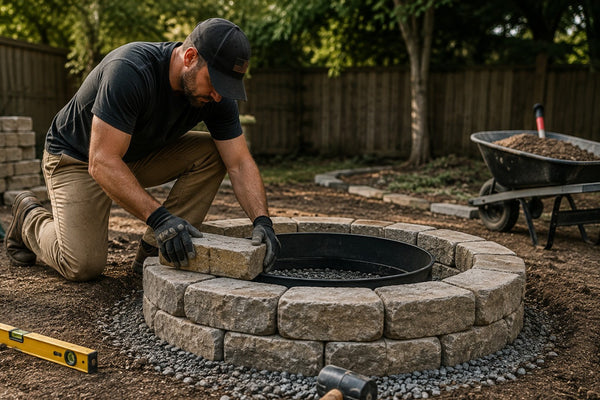
Step 4: Lay the First Course of Blocks
Place the first ring of retaining wall blocks or fire-rated bricks around the perimeter of the circle. If you're using standard retaining wall blocks, ensure they're suitable for fire pit construction or plan to install a steel fire ring to protect them from direct heat. Position each block tightly against the next, adjusting the base material beneath individual blocks as needed until the entire first course is level. Taking extra time here will make the remainder of the project much easier.
Step 5: Install a Fire Ring (Optional but Recommended)
If you're using a steel fire ring, place it inside the first course of blocks. Leave a small gap between the fire ring and the masonry to allow for heat expansion. A fire ring helps protect the surrounding blocks from direct flames and can significantly extend the life of your fire pit.
Step 6: Build the Remaining Courses
Add the next layer of blocks, staggering the joints so they don't align with those below. This creates a stronger, more stable structure. Gently tap each block into position with a rubber mallet as you work. If you're building a permanent fire pit, consider applying landscape adhesive between the upper courses to help secure the structure. Continue stacking the blocks until the fire pit reaches your desired height, which is typically two or three courses for most backyard installations.
Step 7: Finish the Interior and Check Stability
Once the walls are complete, add a thin layer of gravel, lava rock, or another non-combustible material to the bottom of the fire pit. Walk around the structure and gently push against different sections to confirm that everything feels solid and stable. Make any final adjustments before clearing away excess gravel, dirt, or debris from the surrounding area.
Step 8: Test the Fire Pit Safely
Before gathering family and friends around your new fire pit, light a small test fire using dry, seasoned, untreated firewood. Keep a bucket of water, a garden hose, or a fire extinguisher nearby, and observe how the fire burns and where the smoke travels. If everything performs as expected, your fire pit is ready to enjoy and should provide years of safe outdoor gatherings.
Frequently Asked Questions About Building a Fire Pit
What is the best material for a DIY fire pit?
Retaining wall blocks or fire-rated bricks are practical choices for an above-ground fire pit. A steel fire ring can also help protect the surrounding masonry from direct heat.
Do I need a fire ring in my fire pit?
A fire ring is optional but recommended. It helps shield the blocks from direct flames and can extend the life of your fire pit.
What should I put at the bottom of a fire pit?
A layer of gravel, crushed stone, lava rock, or another non-combustible material can provide drainage and create a stable base.
How many layers of blocks should a fire pit have?
For most backyard fire pits, two or three courses of blocks are typically enough, depending on your desired height and design.
Can beginners build an above-ground fire pit?
Yes. An above-ground stone or brick fire pit is one of the more approachable DIY options and can be built using commonly available tools and materials.
Building The Perfect Fire Pit For Your Needs
Building your own fire pit is a rewarding DIY project. With careful planning, the right tools and materials, and a commitment to safe construction, even first-time builders can create a durable feature that will provide years of enjoyment. If a permanent installation isn't the right fit for your home, a portable fire pit is a convenient alternative, especially for camping, beach trips, and other outdoor adventures.
Whichever option you choose, always follow local fire regulations, practice proper fire safety, and maintain your fire pit regularly to keep it safe and ready to enjoy.


0 comments